









How Metal Detectors Keep Frozen Food Safe from Contaminants
You want your frozen food to be safe every time you open a package. A metal detector for frozen food works hard to catch tiny pieces of metal before they reach your plate. This extra step helps keep you safe from sharp bits that could cause harm.
Key Takeaways
- Metal detectors play a crucial role in keeping frozen food safe by catching harmful metal pieces before they reach consumers.
- Common metal contaminants in frozen food include iron, aluminum, copper, and heavy metals like lead and mercury, which can pose serious health risks.
- Detection technology uses electromagnetic fields to identify metal, but factors like food moisture and temperature can affect accuracy, making regular checks essential.
Metal Contaminants in Frozen Food
Sources of Metal in Production
You might wonder where metal comes from in frozen food. It can sneak in during many steps of production. Sometimes, heavy metals enter food through contaminated water used for irrigation. Industrial waste can also add unwanted metals. Pollution from air, water, and soil caused by human activities plays a big part. If farmers use contaminated soil or water, metals can get into the crops before they even reach the factory.
Inside the manufacturing facility, broken machinery parts or maintenance tools can drop bits of metal into the food. When equipment fails, metal detection systems might miss these pieces. If that happens, contaminated products could reach you. This can lead to recalls and strict checks from regulators. That’s why a metal detector for frozen food is so important.Tip: Always check for recalls on frozen food products. Companies use metal detectors to catch problems, but sometimes issues slip through.
Types of Metal Contaminants
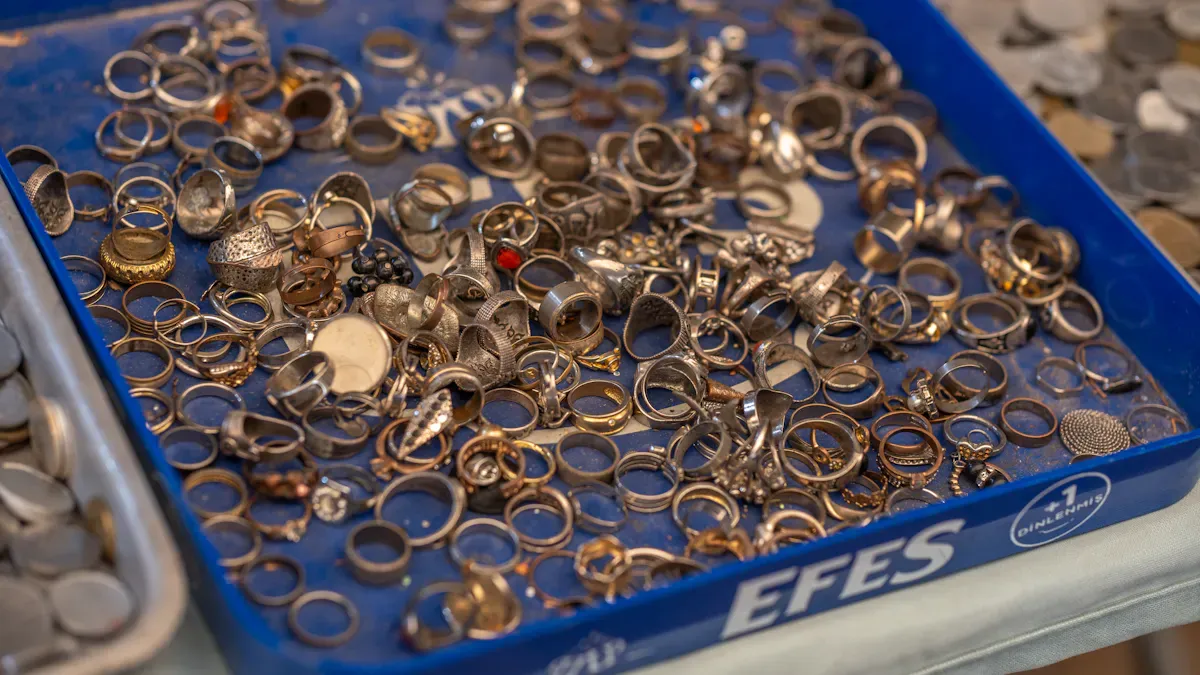
You face different types of metal contaminants in frozen food. These can come from machinery, packaging, or foreign objects during processing. The most common metals include ferrous metals like iron, non-ferrous metals such as aluminum and copper, and stainless steel. Sharp fragments can cause injuries in your mouth or digestive system. Heavy metals like chromium, lead, and mercury pose serious health risks. Chromium can damage kidneys and is linked to cancer. Lead may cause anemia and interfere with vitamin D. Mercury can harm your nervous system, especially if you’re young.
Here’s a quick list of what you might find:
- Iron, aluminum, copper, stainless steel
- Chromium, lead, mercury
- Broken machinery parts
- Maintenance tools
Stay aware, and trust that metal detectors help keep these dangers away from your food.
How Metal Detector for Frozen Food Works

Detection Technology Explained
You might wonder how a metal detector for frozen food actually works. The secret lies in electromagnetic fields. Inside the machine, you’ll find a special setup called a "Balanced Coil" system. This system uses three coils: one coil sends out an electromagnetic field, and two other coils act as receivers. When a piece of metal passes through, it disturbs the balance. The machine picks up this disturbance and sends out an alert. That’s how it knows something is wrong.
A metal detector for frozen food doesn’t just look for one kind of metal. It can spot ferrous metals like iron, non-ferrous metals such as copper and aluminum, and even stainless steel. The machine splits the signals it receives into two channels—one for magnetic signals and one for conductive signals. This helps it tell the difference between the food itself and any metal that shouldn’t be there.
Here’s a quick look at the main parts of a metal detector for frozen food:
| Component | Description |
|---|---|
| Three-coil electromagnetic system | Uses a transmitter and two receivers to sense metal by balancing electromagnetic fields. |
| Sensitivity variations | Detects different metals with varying ease; ferrous is easiest, stainless steel is hardest. |
| Automatic rejection mechanisms | Uses air blasts, pushers, or alarms to remove contaminated food from the line. |
| Advanced noise filtering | Filters out background noise for more accurate detection. |
Note: Modern machines use smart algorithms and digital processing to boost accuracy and reduce false alarms.
Effectiveness and Limitations
You can trust a metal detector for frozen food to catch most metal pieces, but it’s not perfect. The machine works best with ferrous metals because they have strong magnetic properties. Non-ferrous metals and stainless steel are harder to find, but today’s detectors do a good job thanks to advanced technology.
Here’s a table to show you how easy it is to detect different metals:
| Type of Metal | Detection Difficulty |
|---|---|
| Ferrous metals | Easiest to detect due to magnetic and electrical properties |
| Non-ferrous metals | Moderately difficult; conductive but not magnetic |
| Stainless steel | Hardest to detect; low conductivity and magnetic permeability |
The food itself can make things tricky. Frozen food often has high water or salt content, which can confuse the detector. The machine might pick up signals from the food, not just from metal. That’s why manufacturers use multi-frequency scanning and smart learning features. These tools help the detector tell the difference between the food and real metal contaminants.
But some things can still cause problems:
- Changes in temperature or humidity
- Condensation or frost on the food
- Vibrations from nearby machines
- Electrical noise in the factory
If condensation or ice forms on your frozen food, it can make detection harder. The machine might miss a piece of metal or give a false alarm. That’s why regular checks and calibration are so important.Tip: Staff at frozen food plants get special training to run and test these machines. This keeps everything running smoothly and safely.
Comparison with X-ray Detection
You might hear about X-ray systems being used in food factories. How do they stack up against a metal detector for frozen food? Both have their strengths.
- Metal detectors are great at finding all types of metal—ferrous, non-ferrous, and stainless steel.
- X-ray systems can spot not just metal, but also glass, stone, plastic, and even bone.
- X-ray machines don’t get confused by the food’s moisture or salt content as much as metal detectors do.
Here’s a quick comparison:
| Detection Method | Advantages | Disadvantages |
|---|---|---|
| Metal Detectors | - Finds most metals. - Simple to use. |
- Only works on metals. - Can give false alarms with some foods. |
| X-Ray Detection | - Finds metals and non-metals. - Checks for missing pieces. - Keeps records for safety. |
- Can’t find very light objects like paper. - Costs more to buy and run. |
Note: X-ray systems can struggle with very dense or icy foods, but advanced models adjust for these issues.
In most frozen food factories, you’ll see both types of machines working together. This gives you the best protection against all kinds of contaminants. When you pick up a frozen meal, you can feel confident that a metal detector for frozen food—and sometimes an X-ray system—has checked it for safety.
You can count on metal detectors to keep your frozen food safe. Manufacturers follow strict standards and test detectors often.
- Regular checks catch even tiny metal pieces
- Staff document every test and adjust for product changesFood safety teams never stop monitoring, so you get safe, high-quality meals every time.
FAQ
How often do food factories check metal detectors?
You see staff test metal detectors many times each day. They want to catch problems fast and keep your food safe.
Can metal detectors find all types of metal?
Yes, you can trust them to find most metals. Some metals, like stainless steel, are harder to spot, but new machines do a great job.