









How Pet Food Metal Detectors Prevent Contamination in 2026
You want to keep your pets safe and healthy. A pet food metal detector helps you stop harmful metal from getting into pet food. New technology in 2026 gives you higher sensitivity and quick detection. Features like automatic learning and easy-to-use screens make your job simple. These tools meet strict safety rules, so you can trust the food your pets eat.
Key Takeaways
- Pet food metal detectors help prevent harmful metal contamination, ensuring your pets eat safe food.
- Understanding contamination risks, such as heavy metals and bacteria, is crucial for pet health.
- Regular maintenance and calibration of metal detectors enhance their effectiveness and reliability.
- Using advanced detection technology builds customer trust and protects your brand reputation.
- Implementing best practices in food safety can significantly reduce contamination incidents and recalls.
Understanding Contamination Risks

What Is Contamination?
You need to know what contamination means in pet food. Contamination happens when unwanted substances enter the food during production. These substances can be chemical, physical, or microbiological. You can see some common types of contaminants in pet food manufacturing in the table below:
| Contaminant Type | Description |
|---|---|
| Heavy Metals | Includes arsenic, lead, cadmium, and mercury, which can be toxic in high concentrations. |
| Bacteria | Common bacteria include Salmonella, Listeria, and E.Coli, which pose significant health risks. |
| Chemicals | Notable cases like the melamine recall highlight the dangers of chemical contamination. |
You may also find contamination defined by safety regulations as shown here:
| Type of Contamination | Examples | Health Risks |
|---|---|---|
| Chemical | Cyanuric acid, metals | Long-term health risks to pets and humans |
| Microbiological | Salmonella, Listeria, molds | Direct and indirect exposure leading to illnesses |
| Physical | Contaminated raw materials | Potential harm to pets during consumption |
Contamination can come from many sources in pet food production. You should pay attention to these main sources:
- Processing equipment wear and tear can release metal shards into the product stream.
- Raw materials may contain metal fragments from harvesting machinery.
- Operator error or maintenance failures can lead to contamination.
- Environmental factors within the production plant can also contribute.
Dangers for Pets
Contaminated pet food can cause serious health problems for your pets. Chronic exposure to toxic metals can lead to severe health issues, especially for dogs and cats. Arsenic may cause kidney and liver damage and is linked to cancer. Cadmium can result in nephrotoxicity and immune suppression. Lead exposure is associated with neurological dysfunction, anemia, and reproductive issues. Methylmercury, often found in fish-based foods, can cause neurotoxic effects like tremors and cognitive impairment. Chromium (VI) is a carcinogen linked to respiratory and gastrointestinal toxicity.
You want to protect your pets from these dangers. Using a pet food metal detector helps you find and remove metal contaminants before they reach your pets. This tool gives you peace of mind and keeps your pets safe.
Tip: Always check for signs of illness in your pets if you suspect contaminated food. Early detection can save lives.
How Pet Food Metal Detectors Work

Detection Process Explained
You rely on a pet food metal detector to keep your products safe. The detection process starts after cooking. Production lines use advanced metal detection systems to scan for foreign bodies, including metal fragments. This step protects pets from harm and ensures quality.
Here is how the process works:
- You place the pet food on the conveyor belt after cooking.
- The metal detector scans the product for metal contaminants.
- Operators calibrate the detector to maintain high sensitivity.
- If the detector finds contamination, it signals the system to remove the affected product.
The High Speed Pet Food Metal Detector uses true frequency conversion technology. This feature adapts to different product types and enhances detection accuracy. You can see the benefits of high sensitivity and frequency conversion in the table below:
| Feature | Benefit |
|---|---|
| High Sensitivity | Increases the likelihood of detecting metal contaminants in pet food. |
| Frequency Conversion | Adapts to various product effects, improving detection accuracy. |
| True Frequency Conversion Technology | Optimizes performance and allows automatic learning for high sensitivity. |
| Reliable Detection Performance | Ensures consistent accuracy in identifying metal contaminants. |
You interact with a user-friendly LCD screen. The clear interface helps you minimize errors and makes inspection tasks easier. You can store settings for up to 99 products, which lets you switch quickly between product types.
Note: Regular calibration and maintenance of your pet food metal detector help you achieve the best results.
Removal of Metal Contaminants
After detection, you must remove metal contaminants from the production line. Modern systems use several methods to ensure safety and hygiene.
- Removable plastic tubes made from food-safe Delrin prevent metal contaminants from reaching cooking and packing stages.
- Rail-mounted reject valves allow quick removal and cleaning of pipes.
- High-pressure water jets clean the system, preventing cross-contamination.
- Magnetic separators remove ferrous and work-hardened stainless steel particles from the product stream.
- Plate and Grate Magnets capture larger metal fragments at strategic points.
- Magnetic Drums continuously remove contaminants during bulk material handling.
- Pneumatic Line Magnets ensure precise extraction in dry and powdered ingredients.
- Magnetic Liquid Line Traps are used in liquid processing lines to remove metal contaminants.
Magnetic separators capture even the smallest metal contaminants. You reduce the risk of product recalls and equipment failure by using these technologies. Modern magnetic separation equipment addresses unique challenges in the pet food industry.
Tip: Always check that your removal equipment is clean and functioning. This step helps you maintain hygiene and prevent cross-contamination.
You protect pets and your brand reputation by using a pet food metal detector and proper removal methods. These tools help you deliver safe, high-quality pet food every time.
Types of Metal Contaminants

Ferrous, Non-Ferrous, Stainless Steel
You need to understand the different types of metal contaminants that can enter pet food. Ferrous metals include iron and steel. These metals are magnetic and easy to detect. Non-ferrous metals, such as aluminum, copper, and lead, do not have magnetic properties. Stainless steel is a special case. It is non-magnetic and a poor conductor, which makes it harder to detect, especially when wet.
The most common metal contaminants found in pet food are lead, arsenic, cadmium, and mercury. These metals come from environmental pollution, farming, and industrial activities. They can build up in your pet’s body and cause health problems.
Note: You protect your pets from these harmful metals by using a pet food metal detector with high sensitivity.
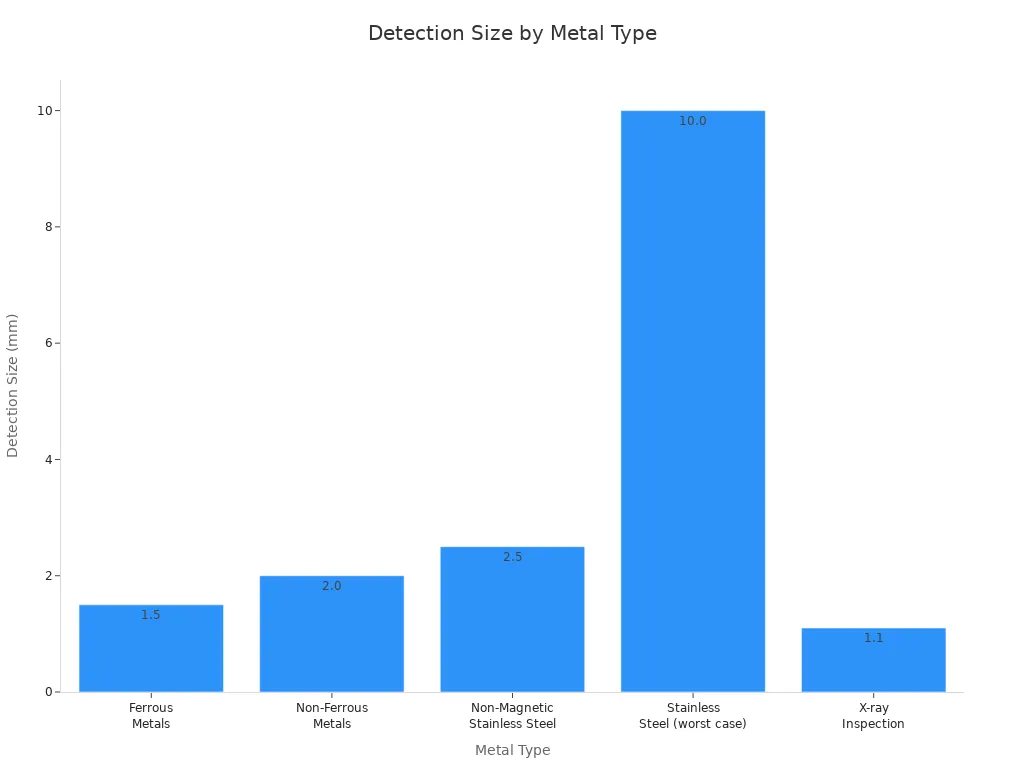
Here is a table showing how detection difficulty changes for each metal type:
| Metal Type | Detection Size (mm) |
|---|---|
| Ferrous Metals | 1.5 |
| Non-Ferrous Metals | 2.0 |
| Non-Magnetic Stainless Steel | 2.5 |
| Stainless Steel (worst case) | 10.0 |
| X-ray Inspection (common) | 1.0 - 1.2 |
Sources in Pet Food Production
You find metal contaminants in pet food from many sources. Machines used in processing can shed metal parts. Raw materials may contain metal fragments from harvesting or transport. Sometimes, maintenance mistakes or equipment wear introduce metals into the food.
Here is a table that explains the characteristics of each contaminant type:
| Type of Contaminant | Characteristics |
|---|---|
| Ferrous | Magnetic and conductive, easy to detect (e.g., alloy steels, carbon steel, iron). |
| Non-ferrous | Non-magnetic but excellent conductors, relatively easy to detect (e.g., aluminum, brass, copper, lead, nickel, tin, zinc). |
| Stainless Steel | Non-magnetic and poor conductors, hard to detect, especially when wet due to similar signal to the product. |
You must check your production line for these risks. You reduce contamination by inspecting equipment and raw materials often. You also improve safety by training staff and using advanced detection systems.
Tip: Regular inspections and maintenance help you prevent metal contamination and keep your pet food safe.
Benefits for Pet Health & Brand Trust

Protecting Pets from Harm
You want your pets to stay healthy and safe. Metal fragments in pet food can cause injuries or sickness. When you use a pet food metal detector, you catch these dangers before they reach your pets. You stop sharp metal pieces from hurting their mouths or digestive systems. You also prevent toxic metals from causing long-term health problems.
Here are some ways you protect pets:
- You remove harmful metal before packaging.
- You lower the risk of recalls and emergencies.
- You keep your pets free from pain and illness.
Tip: Always check your pet’s food for signs of contamination. If you notice anything unusual, contact your veterinarian right away.
A pet food metal detector gives you peace of mind. You know your pets eat safe food every day.
Enhancing Product Reputation
You build trust with your customers when you deliver safe pet food. People want to buy products that protect their pets. When you use advanced detection systems, you show your commitment to quality.
Here is a table showing how safety affects your brand:
| Action | Result |
|---|---|
| Using metal detectors | Higher product safety |
| Preventing contamination | Fewer recalls |
| Meeting safety standards | Stronger customer trust |
| Sharing safety practices | Better brand reputation |
You stand out in the market when you follow strict safety rules. You earn positive reviews and repeat customers. You also avoid costly recalls and legal issues.
Note: Sharing your safety process with customers helps build loyalty. People appreciate brands that care about their pets.
You make your brand stronger by investing in safety and quality. You protect pets and grow your business at the same time.
2026 Technology & Best Practices
Advances in Pet Food Metal Detector Technology
You see big changes in pet food metal detector technology in 2026. New machines use automatic sensitivity learning. This feature lets the detector adjust itself for different products. You do not need to make many manual changes. Multi-product memory helps you store settings for up to 99 products. You can switch between recipes quickly. Large LCD screens make the system easy to use. You get clear instructions and fewer mistakes. True frequency conversion technology improves detection for all types of metals. You find even tiny pieces of stainless steel, which are hard to detect. Easy maintenance means you spend less time cleaning and more time making safe food.
Compliance & Hygiene Standards
You must follow strict rules when you make pet food. International groups like ISO and FAO set safety standards. You need to meet these standards if you want to sell your products in other countries. Modern metal detectors help you:
- Meet ISO and FAO guidelines for food safety.
- Get certifications that show your food is safe.
- Follow rules from HACCP, ISO 22000, and the FDA.
- Protect pets by keeping food free from metal.
- Pass safety checks at important points in your process.
You also need to keep your machines clean. The best detectors use stainless steel and have smooth surfaces. You can clean them fast and stop germs from spreading.
Practical Tips for Manufacturers
You can take simple steps to get the best results from your pet food metal detector:
- Track sensitivity readings over time to spot problems early.
- Check the work area for changes in temperature or humidity.
- Inspect all electrical connections and keep them dry.
- Test the reject system often to make sure it works.
- Update detector settings when you change products.
- Keep software and firmware up to date.
You should also schedule regular maintenance and calibration. This keeps your detector working well. If you skip these steps, you might miss metal pieces in your food. Good care means you protect pets and keep your brand strong.
Tip: Make a checklist for daily, weekly, and monthly maintenance. This helps you remember every step.
You play a key role in keeping pets safe by using a pet food metal detector. This tool helps you stop contamination and protect your brand. When you invest in advanced detection, you see real results:
- Companies report a 67% drop in customer complaints and a 78% reduction in contamination incidents.
- You avoid costly recalls and legal issues, saving money over time.
- Safety-certified brands capture a larger market share.
Ongoing testing and strong safety practices help you meet regulations and build trust with pet owners.