







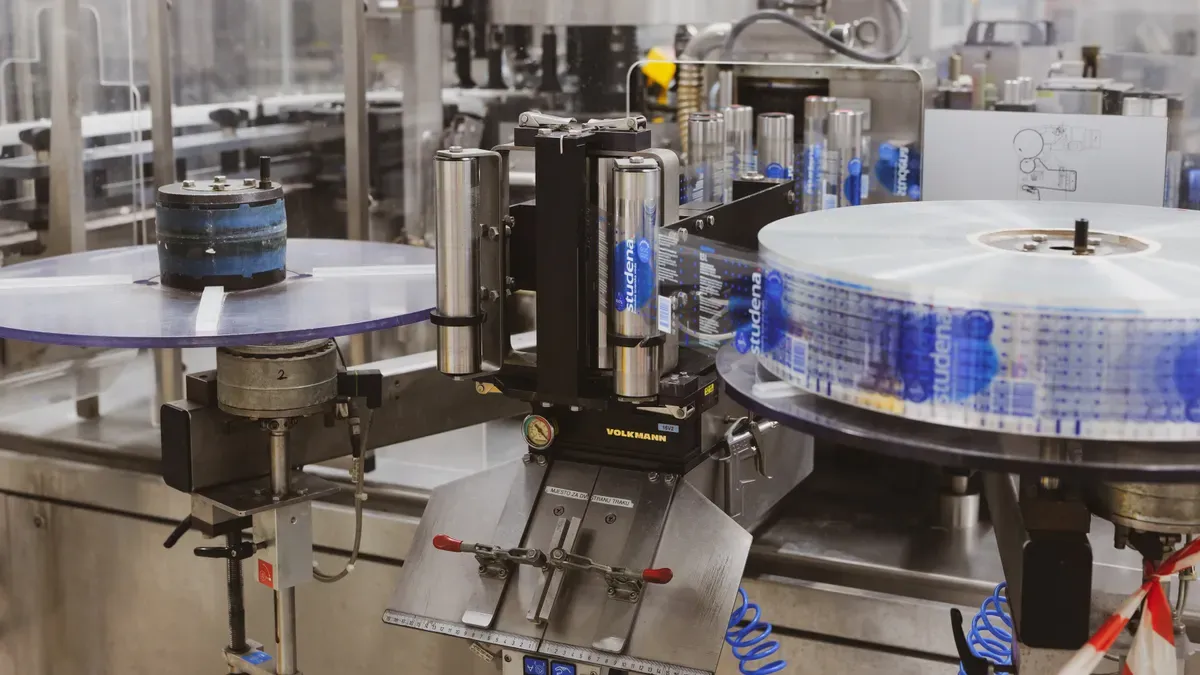


How capsule and tablet metal detectors work in pharmaceutical manufacturing

Capsule And Tablet metal detector systems use high-frequency electromagnetic coils to find metal contaminants in medicines. You depend on these devices to keep products safe for patients and to meet strict cGMP and pharmacopeial rules. Manufacturers place them right after tablet presses or encapsulation machines. This step protects consumers and supports quality control.
| Quality Control Step | Why It Matters |
|---|---|
| Metal detectors act as a safety net | They catch contaminants before products reach you. |
| Checks meet regulatory expectations | Following cGMP avoids recalls and fines. |
| In-line inspection is documented | This makes audits easier and shows a commitment to quality. |
Key Takeaways
- Capsule and tablet metal detectors ensure product safety by detecting harmful metal contaminants before medicines reach patients.
- Regular use of metal detectors helps manufacturers comply with strict cGMP and pharmacopeial standards, avoiding costly recalls.
- Proper placement of detectors after tablet presses or encapsulation machines maximizes contamination detection and maintains production efficiency.
- Routine calibration and sensitivity testing of metal detectors are essential for accurate detection and compliance with safety regulations.
- Investing in advanced metal detection systems saves money in the long run by preventing recalls and protecting brand reputation.
Why Capsule And Tablet Metal Detectors Matter
Ensuring Product Safety
You want every medicine you take to be safe. Capsule And Tablet metal detector systems help you reach this goal by finding metal pieces that do not belong in your tablets or capsules. These metal bits can come from many places during production. Sometimes, machines leave behind tiny metal shavings. Other times, raw materials bring in unwanted metals. In rare cases, metals are added on purpose for special reasons.
Here is a table that shows where metal contamination can come from:
| Source of Contamination | Description |
|---|---|
| Deliberately added to the tablet mixture | Metals may be intentionally included in formulations. |
| Residue from production machinery | Machinery can leave behind metal particles. |
| Impure ingredients sourced for production | Raw materials may contain metal contaminants. |
You need to stop these contaminants before they reach patients. Capsule And Tablet metal detector systems act as a shield. They scan every tablet or capsule as it moves down the line. If they find a problem, they remove the bad product right away. This keeps your medicines safe and protects your health.
Tip: Regular checks with metal detectors lower the risk of recalls and protect your company’s reputation.
Meeting cGMP and Pharmacopeial Standards
You must follow strict rules when you make medicines. Regulatory agencies like the FDA and EMA want you to use tools that keep products safe. Capsule And Tablet metal detector systems help you meet these rules. They show that you care about quality and safety.
Regulators look for certain features in your metal detection process. They want to see that your system can find all types of metals, not just one kind. They also want proof that your equipment works well and fits into your production line. Here is a table that shows what regulators check:
| Feature | Description |
|---|---|
| Compliance | High-sensitivity pharmaceutical metal detectors ensure compliance with FDA and EU GMP standards. |
| Detection | They are capable of detecting ferrous, non-ferrous, and stainless-steel contaminants. |
| Integration | These systems are integrated into tablet and capsule production lines, reducing product recalls. |
Modern systems come with advanced sensors and auto-reject features. These features help you meet 21 CFR Part 11 rules for audit trails. Some models, like the CEIA THS/PH210® Series, offer top performance and traceability. You can show auditors that you use the best tools for quality control.
You should know that using these systems costs money. Basic models start at about $3,000. Advanced ones can cost over $45,000. You also need to pay for maintenance, calibration, and validation each year. These costs can be high, but they help you avoid bigger problems like recalls or fines.
Note: Investing in a good Capsule And Tablet metal detector system saves money in the long run by preventing costly recalls and protecting your brand.
How Capsule And Tablet Metal Detectors Work

High-Frequency Electromagnetic Detection
You rely on Capsule And Tablet metal detector systems to find even the smallest pieces of metal in your medicines. These systems use high-frequency electromagnetic coils. When a tablet or capsule passes through the detector, the coils create a strong electromagnetic field. If any metal is present, it disturbs this field. The system then sends a signal to alert you.
You can see how sensitive these detectors are in the table below:
| Metal Type | Detection Sensitivity (mm) |
|---|---|
| Ferrous | ≥ 0.4 |
| Non-Ferrous | ≥ 0.8 |
| Stainless Steel | ≥ 1.0 |
This means you can catch very tiny pieces of metal, sometimes smaller than a grain of sand. The detection system uses advanced technology to tell the difference between types of metals. For example, balance coil detection theory and automatic phase angle functions help the system identify ferrous, non-ferrous, and stainless steel contaminants. These features also help reduce false alarms by adjusting for the product’s own effect on the electromagnetic field.
Tip: Automatic phase angle functions make sure you do not get too many false positives, so you only remove products that really have metal inside.
Modern Capsule And Tablet metal detector systems often include high-speed reject valves. These valves quickly remove any contaminated product from the line. You do not have to stop production, which saves you time and money.
Here is a summary of how these systems work:
| Feature | Description |
|---|---|
| Detection Mechanism | High-frequency electromagnetic coils differentiate between metal types. |
| Technologies Used | Balance coil detection theory and automatic phase angle functions. |
| Purpose | Compensate for product effects to minimize false positives. |
| Metal Types Detected | Ferrous, non-ferrous, and stainless steel contaminants. |
| Additional Features | Integrated high-speed reject valve mechanism for efficient operation. |
You can find advanced models like the THS/PH210® Series, which meet FDA 21 CFR Part 11 rules. These models give you strong data protection and traceability. Other new products, such as the IQ4M Metal Detector and Performer Pharma Elite, offer better detection and help prevent cross-contamination.
Free Fall and In-Line Inspection
You can choose between two main types of metal detection systems for your production line: free fall and in-line. Each type has its own strengths and challenges.
A free fall system checks tablets or capsules as they drop through a gravity-fed tube. This method works well when you want to inspect products quickly and in bulk. It is simple and effective, but you may face challenges with sensitivity and product effect. Sometimes, the speed or shape of the product can make it harder to detect very small pieces of metal.
An in-line system fits directly into your production flow. It checks every tablet or capsule as it moves along the conveyor. This method gives you continuous monitoring and can be more sensitive. However, you may need to adjust the settings to avoid false rejects, especially if your product changes shape or size during production.
Here is a table that compares the two systems:
| System Type | Advantages | Limitations |
|---|---|---|
| Free Fall | Detects contaminants in a gravity-fed manner | Challenges with product effect and sensitivity |
| In-Line | Integrated into production flow for continuous monitoring | Sensitivity adjustments can lead to false rejects |
When you choose a system, think about your product type, the kind of metal you want to detect, and where your critical control points are. You want to place your Capsule And Tablet metal detector where it will catch the most risks without slowing down your process.
Note: The right system helps you keep your medicines safe and your production line running smoothly.
You can trust that the latest Capsule And Tablet metal detector models offer better hygiene, less risk of cross-contamination, and full compliance with FDA rules. These features help you meet high standards for safety and quality.
Placement in Pharmaceutical Manufacturing

After Tablet Press and Encapsulation
You need to place your Capsule And Tablet metal detector right after the tablet press or encapsulation machine. This spot is critical. It lets you catch metal fragments before they move further down the line. When you check products at this stage, you stop contaminants early. You also reduce the risk of spreading metal pieces to other batches.
Here is what you gain by placing detectors here:
- You inspect every tablet or capsule right after formation.
- You remove contaminated products before they reach packaging.
- You keep your production area cleaner and safer.
- Tip: Early detection helps you avoid costly recalls and protects your brand’s reputation.
Integration in Packaging Lines
You also need to check products during packaging. This step ensures that no metal slips through after the initial inspection. Packaging lines often use foil or metalized film, which can make detection harder. You must use advanced features to keep detection accurate.
| Challenge | Explanation |
|---|---|
| Product-specific validation | You must test each product and packaging type to set the right sensitivity. |
| Multi-frequency for conductive packaging | You need multi-frequency systems to spot metal in foil packs. |
| Routine calibration and verification | You should perform daily checks and regular challenge tests. |
| Control of environmental noise | You must isolate detectors from vibration and electrical noise. |
| Integrated rejection and data logging | You need automatic reject devices and electronic records for every alarm. |
| Cross-training operations and QA teams | You should train your team to understand product effects and machine diagnostics. |
You may face extra challenges with foil packaging. Conductive foil can hide metal fragments or cause false alarms. To solve this, you can use multi-frequency detection, phase-shift analysis, and targeted calibration. These tools help you tell the difference between packaging and real contaminants.
When you integrate metal detectors in packaging lines, you improve safety and traceability. You can:
- Detect foreign materials and keep products safe.
- Check that packaging is correct and labels are accurate.
- Meet safety standards and pass audits.
- Prevent recalls and keep customer trust.
- Catch errors early and avoid delays.
- Note: Careful placement and regular checks make your metal detection system more reliable and effective.
Operation and Qualification
Equipment Setup and Calibration
You need to set up your Capsule And Tablet metal detector carefully. Start by placing the detector in the right spot on your production line. Make sure the machine sits level and stays stable. You must connect all cables and check the power supply. Calibration comes next. You use test pieces made from different metals. Place these pieces in the product flow and watch how the detector responds. Adjust the sensitivity so the detector finds the smallest metal pieces but does not trigger false alarms. You should record every calibration step in your logbook. This helps you show auditors that your equipment works as expected.
Tip: Always calibrate after maintenance or moving the detector. This keeps your results accurate.
Sensitivity Testing and Challenge Procedures
You must test the sensitivity of your detector often. Challenge procedures help you check if the detector can find metal pieces during real production. You run these tests at the start of each batch, after breaks, and at the end of the batch. Use metal test pieces with set sizes. For manufacturing, use 0.5mm ferrous and non-ferrous, and 0.8mm stainless steel. For packaging, use 1.0mm ferrous and non-ferrous, and 1.5mm stainless steel. Record every result and compare it to your action limits.
Here is a table showing best practices for sensitivity testing and challenge procedures:
| Best Practice Category | Details |
|---|---|
| In-line Metal Detector Challenges | Conduct challenges at the start, after breaks, and at batch end. |
| Challenge Specifications | Use 0.5mm ferrous/non-ferrous, 0.8mm stainless for manufacturing; 1.0mm ferrous/non-ferrous, 1.5mm stainless for packaging. |
| In-process Control | Set limits for isolated units and check any excursions. |
| Action Limit Determination | Quality team decides action levels for isolated units. |
| Investigation | Document and investigate if isolated units exceed action limits. |
You must investigate any failed challenge. Document the issue and decide if you need to stop production. Your quality team sets the action limits and reviews every incident. This process keeps your medicines safe and helps you meet regulatory standards.
Note: Regular sensitivity testing helps you catch problems early and keeps your production line running smoothly.
Detection Process and Response
In-Process Control and Action Limits
You need strong in-process controls to keep your medicines safe. Setting action limits helps you decide when to act if you find metal in your products. You follow a clear process to set these limits and keep your records organized.
- Assess risks in your production process. Look for places where metal could enter your tablets or capsules.
- Establish critical limits at control points. Choose the best spots to catch problems early.
- Implement documentation and record keeping. Write down every step and keep records of any contamination. This helps you act fast if you find metal.
- Tip: Good records make it easier to show auditors that you follow safety rules.
You should review your action limits often. If you find a problem, you must check if your limits need to change. This keeps your Capsule And Tablet metal detector system effective.
Steps After Metal Detection
When your metal detector finds a contaminant, it sends out an audio alert. The system moves the contaminated capsules or tablets to a reject bowl. You must tell your Quality Assurance (QA) team right away. Start a Product Non-Conformance (PNC) report and follow your standard operating procedures.
You need to find out why the metal got into your product. Start by defining the problem. Collect all the data about the event. Map out what happened and look for causes and symptoms. Set up corrective actions to fix the issue. Put your solutions in place and check if they work. If your solution helps, use it in other parts of your process.
Note: You cannot restart production until you solve the problem and the QA team approves it.
This process keeps your products safe and helps you meet all quality standards.
You rely on Capsule And Tablet metal detector systems to keep medicines safe and meet strict standards. These devices find even tiny metal pieces, which helps you avoid recalls and protect your brand. You must follow cleaning and operation protocols to reduce contamination risks. Regular calibration and maintenance prevent common issues like sensitivity drift.
- Train your team on SOPs and challenge tests.
- Schedule monthly calibration and reject verification.
- Use product-specific programs for difficult products.
- Consistent use of advanced detection technology improves safety and supports compliance.
FAQ
How often should you calibrate a capsule and tablet metal detector?
You should calibrate your metal detector at least once a month. If you move the machine or perform maintenance, calibrate it again. Regular calibration keeps your results accurate and reliable.
What types of metals can these detectors find?
You can detect ferrous, non-ferrous, and stainless steel metals. The system uses advanced technology to spot even tiny pieces. This helps you keep your products safe.
Can metal detectors work with foil packaging?
Yes, you can use special multi-frequency detectors for foil packaging. These systems adjust for the foil’s effect and still find metal contaminants. Always test and validate for each packaging type.